
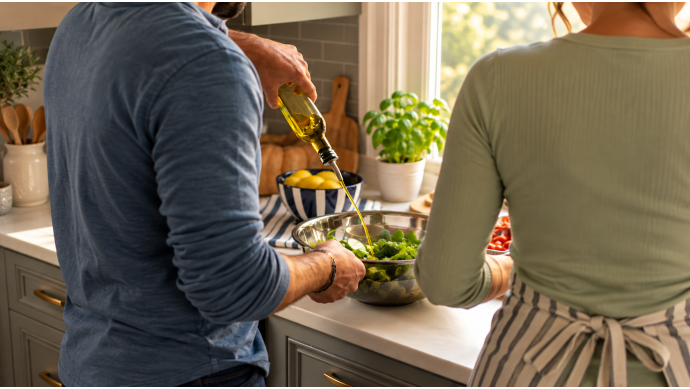
Sharing recipes, methodologies, and meals among generations also means sharing traditions, hopes for the future, and family lore.
Your Gut Is Your Second Brain
Most people say they don't have time to cook during the week, and a third of us feel guilty about it. So, in addition to fetching drive-through dinners — often consumed alone and on the run — we also give ourselves grief about our choices.
Improper nutrition and stress: the perfect recipe for the gut-brain axis disorder, more commonly known as IBS, or irritable bowel syndrome.
Logging Off and Tuning In
Some solutions to improve digestive well-being are frustratingly simple: better nutrition and more mindful eating. These are more easily said than done. Ironically, in our world where electronic "connectivity" is celebrated, we've logged off and shut down important human interactions.
Replacing YouTube, Instagram, and TikTok with a friend, a colleague, or a neighbour is not only emotionally nourishing, but it also slows the meal down, which is kinder to your digestive system.
Eating Slowly Is Full-Filling
Digestion is also affected, since the process actually begins while you're chewing — saliva being the first line of defence when it comes to breaking down your food. Properly chewed food is more easily processed in the gut. Eating more slowly and savouring your meal can also reduce acid reflux, which is partly responsible for the feeling of fatigue and heaviness following a big meal.
Mindful eating also indulges your gut-brain axis, which helps regulate cholesterol and destroy harmful bacteria. It can also help regulate your mood.
This is a system that is being monitored constantly, whether you like it or not. The vagus nerve (also impressively known as "cranial nerve X") connects your brain and your gut. Signals are being relentlessly sent back and forth, which means that your brain is instantly aware of what's in your stomach — like that bag of chips — long before you can even begin pretending it didn't happen.
Indulging in a Slow Feast
When you share a slow feast with your troop, it also provides an opportunity to learn about each other. Sensory engagement with a meal, alongside the presence of friends and family around the table, can provide an opportunity to explore personal cultural influences and biases toward food.
As much as for digestion, a supper table is a place for deliberation and reflection, for sharing misfortune and aspiration, all while savouring something delicious. And all it takes is a little time.
Helpful Probiotics
Living microorganisms that help with digestion:
- Yogurt
- Kefir
- Uncooked sauerkraut
- Traditional kimchi
Helpful Prebiotics
Foods that the body doesn't digest, but that trigger the growth of "good germs" in the gut:
- Whole grains
- Apples and bananas
- Lentils, beans, and chickpeas
- Nuts and seeds
Meal Sharing Tips
- Start with one or two meals a week.
- Have lunch with a colleague.
- Suggest a simple potluck.
- Seek out events in your community.
By Kenny Bodanis
Disclaimer: This article is intended for informational purposes only and does not constitute medical advice. If you are experiencing ongoing digestive symptoms, please consult a qualified healthcare professional.