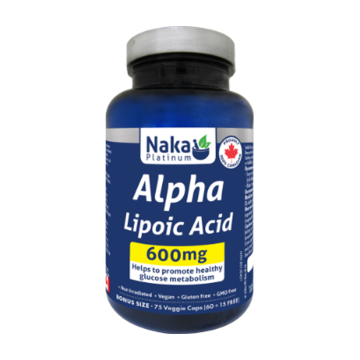
Alpha Lipoic Acid
Alpha lipoic acid — often shortened to ALA on labels — is a compound the body makes in small amounts on its own. It shows up in the antioxidant aisle as a source of antioxidants for the maintenance of good health, and it has a small but loyal following among shoppers who like to keep their antioxidant routine well rounded.
Read more
What makes alpha lipoic acid a little unusual is where it can go to work. Most antioxidants are comfortable in either water-based or fat-based environments, but not both. ALA is one of the rare compounds at home in each, which is why you will sometimes hear it called the "universal antioxidant." That nickname is just a nod to its versatile, both-worlds nature — a handy way to remember what sets it apart on the shelf.
Because the body only produces modest amounts, and because it naturally occurs in just small quantities in everyday foods, many people who want a dedicated source turn to a supplement. It is an easy addition to an antioxidant-minded stack and pairs naturally with the other names shoppers browse in this aisle. Because it is made inside the body rather than obtained mainly from the plate, a supplement is the most reliable way for shoppers to work a steady, dedicated amount into their day.
There is one label detail worth understanding before you choose. You will see two versions: plain alpha lipoic acid and "R-ALA," short for R-alpha lipoic acid. R-ALA is the form that occurs naturally in the body, while standard ALA is a mixture that includes both the R and its mirror-image S form. Neither is a better or worse buy on its own — it is simply a distinction to be aware of so you know exactly what a label is describing.
On our shelves, alpha lipoic acid is most commonly sold as capsules and tablets, both easy to fold into a daily supplement routine. Shoppers frequently browse it alongside CoQ10, vitamin C and vitamin E as part of a broader antioxidant selection. As with any supplement, speak with your health-care practitioner before adding it to your routine.
Frequently asked questions
What is alpha lipoic acid?
It is a compound the body makes in small amounts, and it is sold as a source of antioxidants for the maintenance of good health. On labels it is often abbreviated to ALA.
Why is it called the "universal antioxidant"?
That is a nickname, not an official title. It reflects the fact that alpha lipoic acid is at home in both water-based and fat-based environments, which is unusual among antioxidants.
What is the difference between ALA and R-ALA?
"R-ALA" is the R-form that occurs naturally in the body, while plain ALA is a mixture of the R and S forms. It is simply a label distinction to help you know what you are buying.
What forms do you carry?
Most commonly capsules and tablets, both easy to add to a daily routine. Formats and label descriptions vary, so it is always worth reading the bottle.
What do people take it alongside?
It is popular within a broader antioxidant routine and is often browsed next to CoQ10, vitamin C and vitamin E. Many shoppers build a small antioxidant-minded stack.
Related: Antioxidants · CoQ10 & Ubiquinol · Vitamin E · Vitamin C